
If you are planning a blue marlin trip to Punta Cana, the months to circle are October, November and December.
Blue marlin show up here in August and the bite holds into January. But the stretch where everything lines up — fish and weather — sits in the last quarter of the year.
Key takeaways
- Blue marlin run from August into January off Cap Cana, with the strongest bite from October through December
- The ocean is at its calmest from September to mid-November
- Most visiting American boats head home at Thanksgiving, leaving the fishery open through December and January
What the season actually looks like
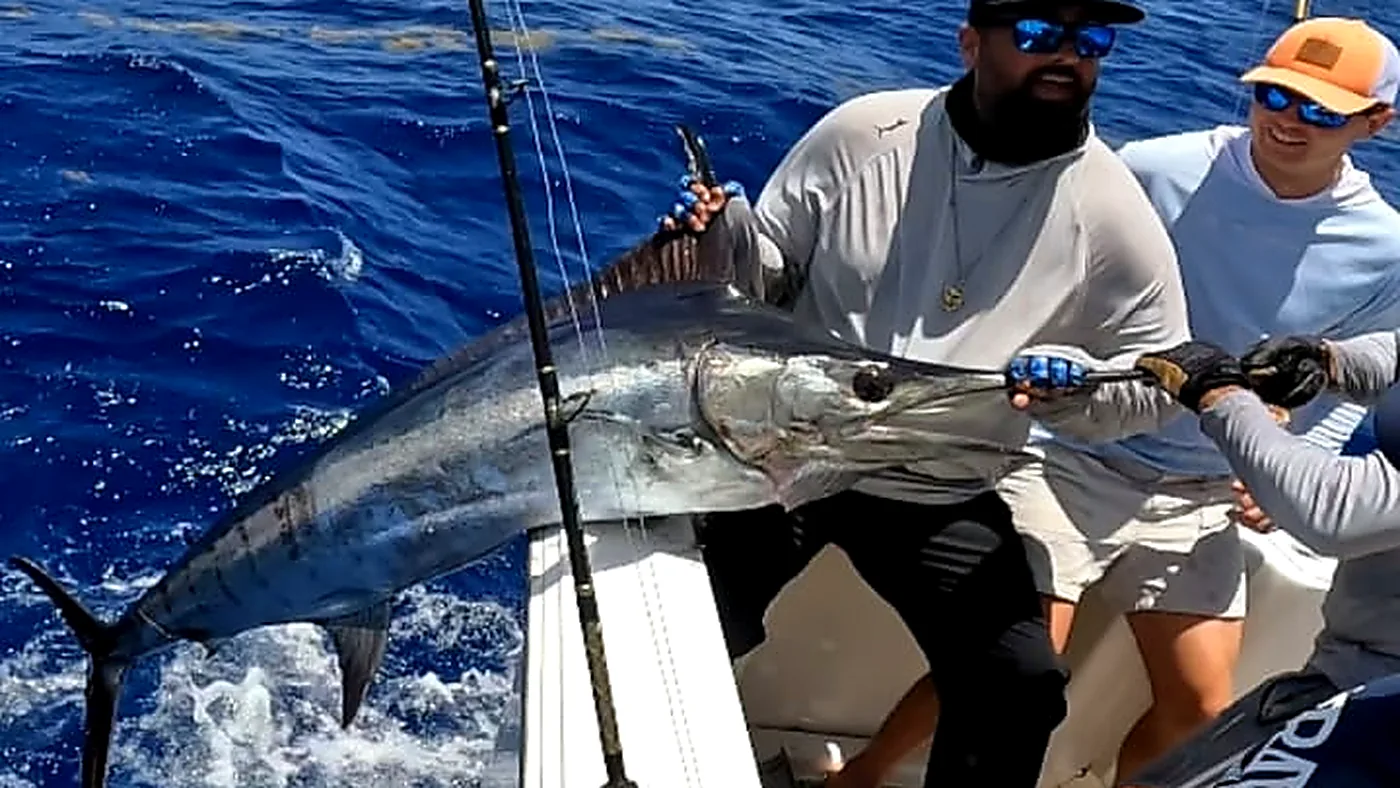
Capt. Edgar Acra runs the Tease Me out of Cap Cana Marina and keeps his own count. He starts catching blues in August. Through the back half of the season the numbers build, and the bite turns on in November.
In a recent season he released 104 blue marlin from August onward. His first grand slam of that run landed on November 1st, and he put together four grand slams in roughly thirty-five days. One of them included a spearfish. He has had triple headers, and a quad hookup where the crew landed three of the four fish.
Across about forty to fifty trips from September on, he caught at least one blue marlin on every trip except one or two days in September when the current went bad.
That is the practical answer to “when should I come.” The fish are available for six months. They are thick for three.
Why the water cooperates at the same time
Here is the part that surprises people: the calmest water of the year off Punta Cana runs from September to mid-November.
That overlaps with hurricane season, which sounds contradictory until you have fished it. Between systems, the surface goes flat. Edgar describes the summer Atlantic side as water for big boys. The fall is a different ocean entirely.
So the stretch with the heaviest blue marlin bite is also the stretch most likely to give you a comfortable ride to the FADs and back. For anyone who has talked themselves out of an offshore day because of the ride, that combination matters more than any other number in this article.
December and January: the quiet months
Visiting American sportfish boats fish Punta Cana hard through the fall. Most of them run home around Thanksgiving and do not come back until the following August.
What that leaves behind is unusual. The fish are still here. The boat count drops to roughly ten or twelve working the area.
In two December weeks, the marina’s release report across that small fleet came back at 597 blue marlin, 37 white marlin and 83 sailfish raised, with the large majority released. That is a handful of boats on a fishery that has not slowed down.
If your calendar is flexible, December and early January are the months where you get peak-season fishing with off-season traffic.
The records back it up
Cap Cana has been trading the Atlantic single-day blue marlin release record back and forth, and the dates tell their own story.
The Blue Bird set it at 23 releases in a day in 2016. That mark stood until the Trilo Bite pushed it to 25 in a single December day. The Gunpowder took it to 27 in one day in early November, and the Viking Demo 68 team holds it now with 30 releases out of 36 blue marlin.
October tournaments show the same pattern. A recent Cap Cana Classic finished with 87 blue marlin released across thirty boats over two days of fishing.
None of those are fall outliers. They are October, November and December.
How the fish run here
Blue marlin off Punta Cana are not all giants, and that is by design rather than disappointment.
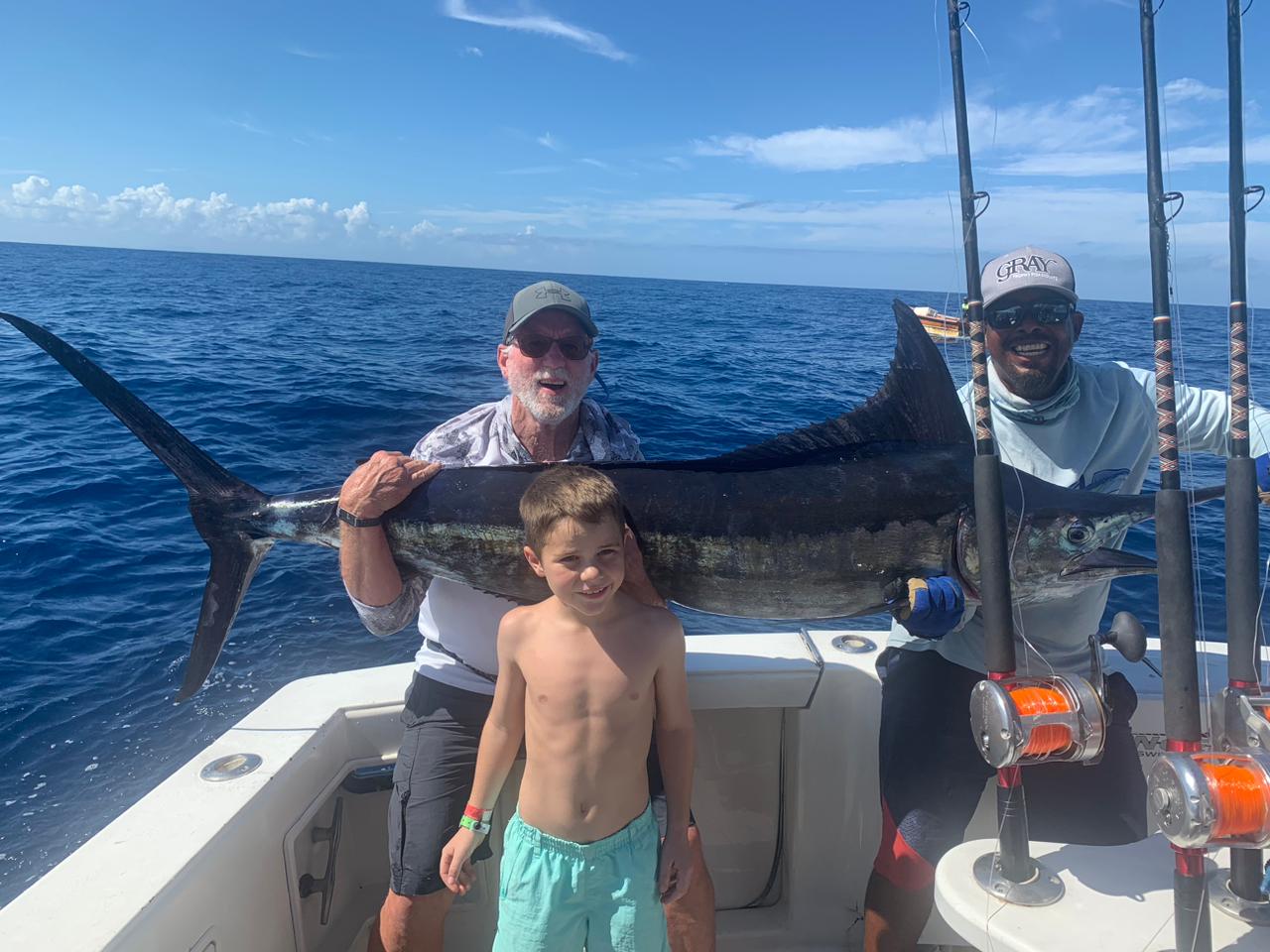
You will hook juveniles in the 100 to 120 pound range and solid mid-grade fish around 200. Out of roughly thirty bites, one is likely to be a genuine heavyweight in the 400 to 500 pound class.
The reason the size spread works is the tackle. The heaviest gear on the Tease Me is 30 pound. Everything is light tackle, run on ballyhoo with circle hooks, and a mid-sized blue on 30 pound line is a real fight — often a better one than the same fish on heavy gear.
Where the fish are
The blue marlin fishery sits north of the marina, on the Atlantic side, around the FADs: fish aggregating devices set by local fishermen in 2,500 to 4,000 feet of water. There are roughly eighty of them in the area.
The run is about 25 miles, which puts the whole thing inside a 10-hour day. No overnight, no multi-day package, no extra night of hotel.
Planning your trip around the peak
If you want the heaviest bite and the calmest ride, book October or November.
If you want the same fishing with a fraction of the boat traffic, book December or early January.
If your dates are locked into spring, you are arriving for white marlin, which run March through July with the strongest weeks in April and May. Different fish, same water, and whites here run bigger than most anglers expect.
Edgar does not promise a fish, and nobody honest does. What he will put a number on is the 10-hour blue marlin trip: around 90% odds of a blue, with the remaining 10% being the luck of the day.
Frequently asked questions
When is blue marlin season in Punta Cana?
Blue marlin run from August into January. The strongest bite is October through December.
What is the best month for blue marlin in the Dominican Republic?
November is consistently the month when the bite turns on, and it holds through December.
Is the water rough during blue marlin season?
The calmest stretch of the year runs September to mid-November, which overlaps with the peak.
How far offshore do you have to go?
About 25 miles to the FADs, which fits inside a 10-hour trip out of Cap Cana Marina.
How big do the blue marlin get here?
Most fish run from 100 to 200 pounds, with roughly one in thirty bites coming from a 400 to 500 pound fish.
Book the October to December window
Message Capt. Edgar directly and he will tell you what the bite is doing this week.